
|
You entered: nearest stars
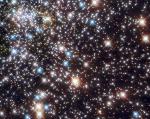 Oddities of Star Cluster NGC 6397
20.02.2002
One of these stars is blinking. This star, a member of globular cluster NGC 6397, is noteworthy not just because it blinks, but because it blinks so fast and because its companion star is so atypical.
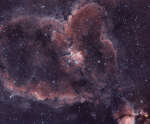 IC 1805: The Heart Nebula in HDR
25.10.2011
What powers the Heart Nebula? The large emission nebula dubbed IC 1805 looks, in whole, like a human heart. The nebula glows brightly in red light emitted by its most prominent element: hydrogen. The red glow and the larger shape are all created by a small group of stars near the nebula's center.
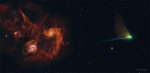 APOD: 2023 March 1 Б The Flaming Star Nebula
1.03.2023
Is star AE Aurigae on fire? No. Even though AE Aurigae is named the Flaming Star and the surrounding nebula IC 405 is named the Flaming Star Nebula, and even though the nebula appears to some like a swirling flame, there is no fire.
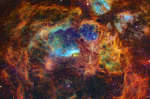 NGC 6357: The Lobster Nebula
28.10.2020
Why is the Lobster Nebula forming some of the most massive stars known? No one is yet sure. Cataloged as NGC 6357, the Lobster Nebula houses the open star cluster Pismis 24 near its center -- a home to unusually bright and massive stars.
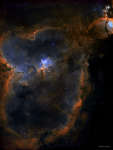 Bright from the Heart Nebula
27.10.2015
What's that inside the Heart Nebula? First, the large emission nebula dubbed IC 1805 looks, in whole, like a human heart. The nebula glows brightly in red light emitted by its most prominent element: hydrogen.
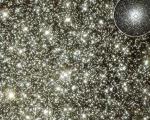 Unusual Flashes Toward Globular Cluster M22
3.07.2001
What is causing the unusual flashes behind globular cluster M22? This teaming ball of stars is the brightest globular cluster visible in Earth's northern hemisphere. M22, shown in full in the inset, spans about 50 light years away and lies 8500 light-years toward the constellation of Sagittarius.
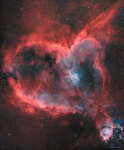 In the Heart of the Heart Nebula
14.02.2022
What excites the Heart Nebula? First, the large emission nebula dubbed IC 1805 looks, in whole, like a human heart. Its shape perhaps fitting of the Valentine's Day, this heart glows brightly in red light emitted by its most prominent element: excited hydrogen.
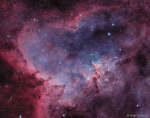 In the Heart of the Heart Nebula
14.02.2018
What's that inside the Heart Nebula? First, the large emission nebula dubbed IC 1805 looks, in whole, like a human heart. It's shape perhaps fitting of the Valentine's Day, this heart glows brightly in red light emitted by its most prominent element: hydrogen.
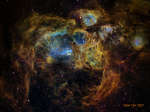 NGC 6357: The Lobster Nebula
26.12.2018
Why is the Lobster Nebula forming some of the most massive stars known? No one is yet sure. Cataloged as NGC 6357, the Lobster Nebula houses the open star cluster Pismis 24 near its center -- a home to unusually bright and massive stars.
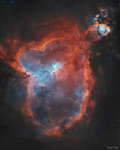 IC 1805: The Heart Nebula
11.09.2019
What energizes the Heart Nebula? First, the large emission nebula dubbed IC 1805 looks, in whole, like a human heart. The nebula glows brightly in red light emitted by its most prominent element: hydrogen. The red glow and the larger shape are all powered by a small group of stars near the nebula's center.
|
January February March April May June July August September October |
|||||||||||||||||||||||||||||||||||||||||||||||||