
|
You entered: clouds
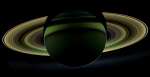 Saturn at Night
22.12.2012
Splendors seldom seen are revealed in this glorious picture from Saturn's shadow. Imaged by Cassini on October 17, 2012 during its 174th orbit, the ringed planet's night side is viewed from...
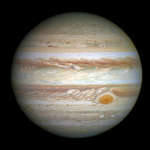 Hubble s Jupiter and Shrinking Great Red Spot
17.05.2014
Gas giant Jupiter is the solar system's largest world with about 320 times the mass of planet Earth. It's also known for a giant swirling storm system, the Great Red Spot, featured in this sharp Hubble image from April 21.
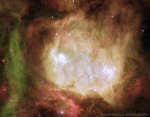 Halloween and the Ghost Head Nebula
29.10.2016
Halloween's origin is ancient and astronomical. Since the fifth century BC, Halloween has been celebrated as a cross-quarter day, a day halfway between an equinox (equal day / equal night) and a solstice (minimum day / maximum night in the northern hemisphere).
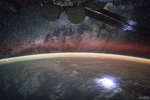 Space Station Vista: Planet and Galaxy
17.01.2017
If you could circle the Earth aboard the International Space Station, what might you see? Some amazing vistas, one of which was captured in this breathtaking picture in mid-2015. First, visible at the top, are parts of the space station itself including solar panels.
 Pelican Nebula Close Up
2.08.2017
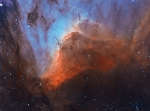
The prominent ridge of emission featured in this vivid skyscape is designated IC 5067. Part of a larger emission region with a distinctive shape, popularly called The Pelican Nebula, the ridge spans about 10 light-years and follows the curve of the cosmic pelican's head and neck.
 Saturn s North Polar Hexagon
6.09.2018
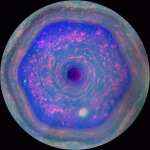
In full view, the amazing six-sided jet stream known as Saturn's north polar hexagon is shown in this colorful Cassini image. Extending to 70 degrees north latitude, the false-color video frame is map-projected, based on infrared, visible, and ultraviolet image data recorded by the Saturn-orbiting spacecraft in late 2012.
 Earth During a Total Solar Eclipse
28.12.2020
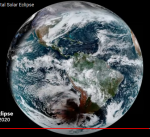
What does the Earth look like during a total solar eclipse? It appears dark in the region where people see the eclipse, because that's where the shadow of the Moon falls. The shadow...
 The Pencil Nebula Supernova Shock Wave
22.02.2024
This supernova shock wave plows through interstellar space at over 500,000 kilometers per hour. Centered and moving upward in the sharply detailed color composite its thin, bright, braided filaments are actually long ripples in a cosmic sheet of glowing gas seen almost edge-on.
 APOD: 2026 April Б Caught in the Web
2.04.2026
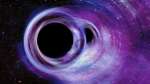
How can we see what is invisible? Black holes are not easy to see in the dark cosmic night, but astronomers can find them by analyzing their gravitational effects on matter, light and spacetime.
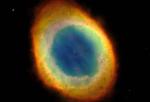 M57: The Ring Nebula
29.07.2001
Except for the rings of Saturn, the Ring Nebula (M57) is probably the most famous celestial band. This planetary nebula's simple, graceful appearance is thought to be due to perspective -- our view from planet Earth looking straight into what is actually a barrel-shaped cloud of gas shrugged off by a dying central star.
|
January February March April May June July August September |
|||||||||||||||||||||||||||||||||||||||||||||||||