
|
You entered: active region
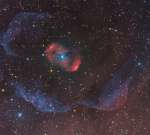 A Halo for NGC 6164
22.05.2014
Beautiful emission nebula NGC 6164 was created by a rare, hot, luminous O-type star, some 40 times as massive as the Sun. Seen at the center of the cosmic cloud, the star is a mere 3 to 4 million years old.
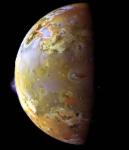 Io: The Prometheus Plume
18.08.1997
Two sulfurous eruptions are visible on Jupiter's volcanic moon Io in this color composite Galileo image. On the left, over Io's limb, a new bluish plume rises about 86 miles above the surface of a volcanic caldera known as Pillan Patera.
 Io: The Prometheus Plume
22.06.2002
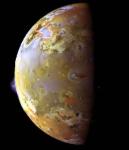
Two sulfurous eruptions are visible on Jupiter's volcanic moon Io in this color composite Galileo image. On the left, over Io's limb, a new bluish plume rises about 86 miles above the surface of a volcanic caldera known as Pillan Patera.
 Io: The Prometheus Plume
11.02.2007
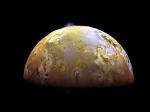
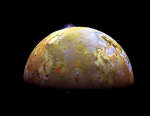
What's happening on Jupiter's moon Io? Two sulfurous eruptions are visible on Jupiter's volcanic moon Io in this color composite image from the robotic Galileo spacecraft that orbited Jupiter from 1995 to 2003.
 Io: The Prometheus Plume
22.05.2011
What's happening on Jupiter's moon Io? Two sulfurous eruptions are visible on Jupiter's volcanic moon Io in this color composite image from the robotic Galileo spacecraft that orbited Jupiter from 1995 to 2003.
 NGC 6164: Dragons Egg Nebula and Halo
26.12.2022
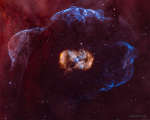
The star at the center created everything. Known as the Dragon's Egg, this star -- a rare, hot, luminous O-type star some 40 times as massive as the Sun -- created not only the complex nebula (NGC 6164) that immediately surrounds it, but also the encompassing blue halo.
 Wright Mons in Color
15.01.2016
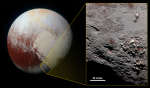
Informally named Wright Mons, a broad mountain about 150 kilometers across and 4 kilometers high with a wide, deep summit depression is featured in this inset image captured during the New Horizons flyby of Pluto in July 2015.
 A 2000 Leonid Through Orion
20.11.2000
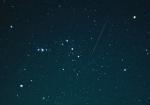
The Leonid Meteor Shower this year could be described as good but not great. During November 17 and 18 the Earth crossed through several streams of sand-sized grit left orbiting the Sun by Comet Tempel-Tuttle. Several distinct peaks in meteor activity were reported, with
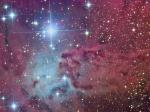 The Fox Fur Nebula
14.03.2005
The nebula surrounding bright star S Mon is filled with dark dust and glowing gas. The strange shapes originate from fine interstellar dust reacting in complex ways with the energetic light and hot gas being expelled by the young stars.
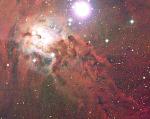 The Fox Fur Nebula
1.07.2002
The nebula surrounding bright star S Mon is filled with dark dust and glowing gas. The strange shapes that surrounding this star originate from fine interstellar dust reacting in complex ways with the energetic light and hot gas being expelled by the young stars.
|
January February March April May June July August |
||||||||||||||||||||||||||||||||||||||||||||||||||||||||