
|
You entered: extremely red object
 Planetary Nebula Project
18.02.2011
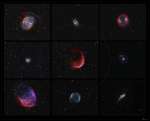
Cast off by dying sunlike stars, planetary nebulae are a brief but glorious final phase of stellar evolution. The gaseous shrouds are ionized by an extremely hot central source, the shrinking core of a star running out of fuel for nuclear fusion.
 Mare Orientale
12.03.2011
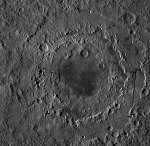
Shaped like a target ring bull's-eye, the Mare Orientale is one of the most striking large scale lunar features. Located on the Moon's extreme western edge, it is unfortunately difficult to see from an earthbound perspective.
 Mare Orientale
12.01.1996
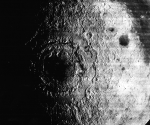
Looking like a target ring bull's-eye, the Mare Orientale is one of the most striking large scale lunar features. Located on the Moon's extreme western edge, this impact basin is unfortunately difficult to see from an earthbound perspective.
 Mare Orientale
23.11.2002
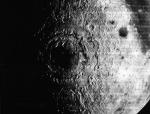
Like a target ring bull's-eye, the Mare Orientale is one of the most striking large scale lunar features. Located on the Moon's extreme western edge, this impact basin is unfortunately difficult to see from an earthbound perspective.
 EUVE Sky Map
31.01.2002
The stars beyond the Sun and the distant galaxies should be undetectable at extreme ultraviolet wavelengths. At least that was the conventional wisdom when it was first realized that the space between the stars is filled with hydrogen, a strong absorber of extreme ultraviolet light.
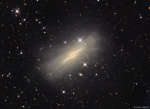 The Edge On Spindle Galaxy
25.07.2018
What kind of celestial object is this? A relatively normal galaxy -- but seen from its edge. Many disk galaxies are actually just as thin as NGC 5866, pictured here, but are not seen edge-on from our vantage point. A perhaps more familiar galaxy seen edge-on is our own Milky Way Galaxy.
 APOD: 2024 March 6 Б M102: Edge on Disk Galaxy
6.03.2024
What kind of celestial object is this? A relatively normal galaxy -- but seen from its edge. Many disk galaxies are actually just as thin as NGC 5866, the Spindle galaxy, pictured here, but are not seen edge-on from our vantage point. A perhaps more familiar galaxy seen edge-on is our own Milky Way galaxy.
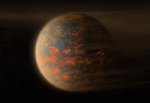 Cancri 55 e: Climate Patterns on a Lava World
5.04.2016
Why might you want to visit super-earth Cancri 55 e? Its extremely hot climate would be a deterrent, as mornings on this world might bring fresh lava flows. Discovered in 2004, the planet Cancri 55 e has twice the diameter of our Earth and about 10 times Earth's mass.
|
January February March April May June July August |
||||||||||||||||||||||||||||||||||||||||||||||||||||||||