
|
You entered: Cat's Paw nebula
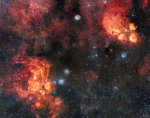 NGC 6357: The Lobster Nebula
7.02.2017
Why is the Lobster Nebula forming some of the most massive stars known? No one is yet sure. Near the more obvious Cat's Paw nebula on the upper right, the Lobster Nebula...
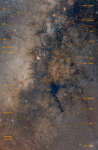 The Annotated Galactic Center
31.08.2010
The sky toward the center of our Galaxy is filled with a wide variety of celestial wonders, many of which are visible from a dark location with common binoculars. Constellations near the Galactic Center include Sagittarius, Libra, Scorpius, Scutum, and Ophiuchus.
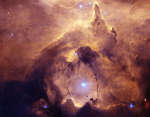 A Massive Star in NGC 6357
21.11.2010
For reasons unknown, NGC 6357 is forming some of the most massive stars ever discovered. One such massive star, near the center of NGC 6357, is framed above carving out its own interstellar castle with its energetic light from surrounding gas and dust.
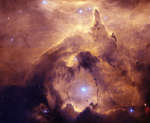 A Massive Star in NGC 6357
22.10.2013
For reasons unknown, NGC 6357 is forming some of the most massive stars ever discovered. One such massive star, near the center of NGC 6357, is framed above carving out its own interstellar castle with its energetic light from surrounding gas and dust.
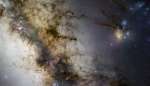 Gigagalaxy Zoom: Galactic Center
25.09.2009
From Sagittarius to Scorpius, the central Milky Way is a truly beautiful part of planet Earth's night sky. The gorgeous region is captured here, an expansive gigapixel mosaic of 52 fields spanning 34 by 20 degrees in 1200 individual images and 200 hours of exposure time.
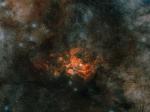 Star Forming Region NGC 6357
20.12.2006
For reasons unknown, NGC 6357 is forming some of the most massive stars ever discovered. Near the more obvious Cat's Paw nebula, NGC 6357 houses the open star cluster Pismis 24, home to these tremendously bright and blue stars.
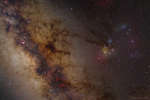 A Wide Field Image of the Galactic Center
6.01.2012
From Sagittarius to Scorpius, the central Milky Way is a truly beautiful part of planet Earth's night sky. The gorgeous region is captured in this wide field image spanning about 30 degrees.
 APOD: 2025 September 17 Б Nebulas and Clusters in Sagittarius
17.09.2025
Can you spot famous celestial objects in this image? 18th-century astronomer Charles Messier cataloged only two of them: the bright Lagoon Nebula (M8) at the bottom, and the colorful Trifid Nebula (M20) at the upper right.
|
January February March April May June July August September |
|||||||||||||||||||||||||||||||||||||||||||||||||