
|
You entered: hydrogen
 Small Star
5.06.1997
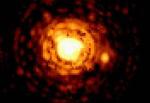
A dim double star system cataloged as Gliese 623 lies 25 light-years from Earth, in the constellation of Hercules. The individual stars of this binary system were distinguished for the first time when the Hubble Space Telescope's Faint Object Camera recorded this image in June 1994.
 EUVE Sky Map
30.01.2002
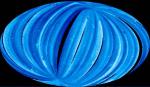
The stars beyond the Sun and the distant galaxies should be undetectable at extreme ultraviolet wavelengths. At least that was the conventional wisdom when it was first realized that the space between the stars is filled with hydrogen, a strong absorber of extreme ultraviolet light.
 Ring Nebula Deep Field
5.11.2009
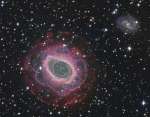
A familiar sight to sky enthusiasts with even a small telescope, the Ring Nebula (M57) is some 2,000 light-years away in the musical constellation Lyra. The central ring is about one light-year across...
 M27: Not A Comet
26.06.2008
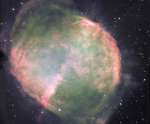
Born on June 26th in 1730, astronomer Charles Messier scanned 18th century French skies for comets. To avoid confusion and aid his comet hunting, he diligently recorded this object as number 27 on his list of things which are definitely not comets.
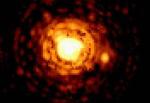 Small Star
19.11.1999
A dim double star system cataloged as Gliese 623 lies 25 light-years from Earth, in the constellation of Hercules. The individual stars of this binary system were distinguished for the first time when the Hubble Space Telescope's Faint Object Camera recorded this image in June 1994.
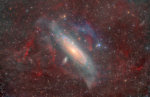 APOD: 2026 June 3 Б Andromeda Through Gas and Dust
2.06.2026
Over 1000 years ago, Persian astronomer Abd al-Rahman al-Sufi published humanityБs oldest known record of the Andromeda Galaxy in "The Book of Fixed Stars" (Bodleian Library MS. Marsh 144 p. 167). 800 years later, Andromeda became the 31st entry in Charles MessierБs "Catalogue of Nebulae and Star Clusters".
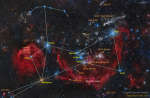 Official Star Names for Orion
3.12.2016
Familiar stars in Orion and constellations across the sky now have official names. Over the past year, the International Astronomical Union, the only body officially tasked with naming stars, approved names already in common use for 227 of the brightest stars, including the most famous stars on the sky Sirius, Polaris, and Betelgeuse.
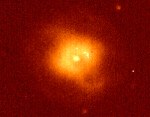 NGC 4361: Galaxy Shaped Planetary Nebula
28.12.1995
Glowing in the red light emitted by hydrogen atoms, the planetary nebula NGC 4361 is pictured above. The nebula itself is formed by the outer layers of gas shrugged off by the central star visible in the image.
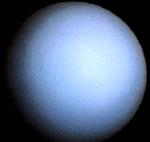 Uranus: The Tilted Planet
14.11.1997
Uranus is the third largest planet after Jupiter and Saturn. This picture was snapped by the Voyager 2 spacecraft in 1986 - the only spacecraft ever to visit Uranus. Uranus has many moons and a ring system. Uranus is composed mostly of rock and ices, but with a thick hydrogen and helium atmosphere.
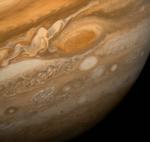 Jupiter from Voyager
18.07.1999
This picture of the planet Jupiter was taken by the Voyager 1 spacecraft as it passed the planet in 1979. Jupiter, a gas giant planet with no solid surface, is the largest planet in the Solar System and is made mostly of the hydrogen and helium.
|
January February March April May June July August September |
|||||||||||||||||||||||||||||||||||||||||||||||||