
|
You entered: total lunar eclipse
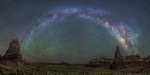 From the Temple of the Sun to the Temple of the Moon
7.10.2014
What connects the Sun to the Moon? Many answers have been given throughout history, but in the case of today's featured image, it appears to be the plane of our Milky Way Galaxy.
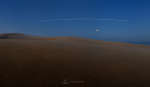 A View from Earth s Shadow
20.05.2022
This serene sand and skyscape finds the Dune of Pilat on the coast of France still in Earth's shadow during the early morning hours of May 16. Extending into space, the planet's dark umbral shadow covered the Moon on that date.
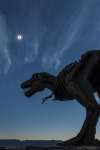 Eclipsosaurus Rex
7.10.2017
We live in an era where total solar eclipses are possible because at times the apparent size of the Moon can just cover the disk of the Sun. But the Moon is slowly moving away from planet Earth. Its distance is measured to increase about 1.5 inches (3.8 centimeters) per year due to tidal friction.
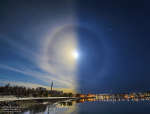 Sun and Moon Halo
3.04.2015
Two pictures captured on April 1 are combined in this creative day and night composite. Separated in time by about 10 hours the images otherwise match, looking along the coast at Östersund Sweden.
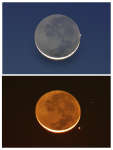 Lunar Occultation of Mercury
28.02.2026
Fans of the western sky after sunset have lately enjoyed this month's remarkable array of bright planets. Witnessed from some locations, on February 18 planet Mercury even appeared to slide behind the Moon, an event known as a lunar occultation.
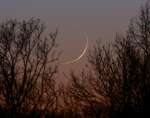 A Twilight Occultation
10.12.2010
A thin, one day old crescent Moon hugged the western horizon after sunset on Monday, December 6. The Moon also occulted or passed in front of Mars. But only some well-placed skygazers along a band through North America were able to catch this lunar occultation's final act in fading twilight.
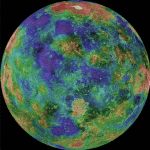 Beneath Venus' Clouds
24.09.1996
If the thick clouds covering Venus were removed, how would the surface appear? Using an imaging radar technique, the Magellan spacecraft was able to lift the veil from the Face of Venus and produce this spectacular high resolution imageof the planet's surface.
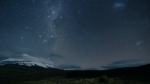 Nocturnal: Scenes from the Southern Night
6.08.2012
Have you ever seen the night sky change? It does -- sometimes in beautiful and unexpected ways. To see it, though, usually requires patience. The above award winning video shows several of the possible changes in dramatic fashion with a time lapse video.
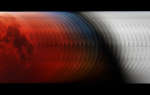 Into the Shadow
24.01.2020
On January 21, 2019 moonwatchers on planet Earth saw a total lunar eclipse. In 35 frames this composite image follows the Moon that night as it crossed into Earth's dark umbral shadow. Taken...
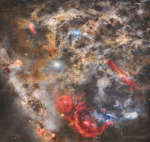 APOD: 2026 March 2 Б The Dusty Surroundings of Orion and the Pleiades
2.03.2026
How well do you know the night sky? OK, but how well can you identify famous sky objects in a very deep image? Either way, here is a test: see if you can find some well-known night-sky icons in a deep image filled with filaments of normally faint dust and gas.
|
January February March April May June July August September |
|||||||||||||||||||||||||||||||||||||||||||||||||