
|
You entered: rocket
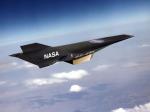 NASAs X 43A Scramjet Sets Air Speed Record
29.03.2004
Using oxygen from the air itself, a NASA experimental jet propelled itself past Mach 7 in the atmosphere above the Pacific Ocean this weekend. The small automated X-43A Hyper-X craft was dropped from a huge converted B-52 bomber and then accelerated by a standard Pegasus rocket.
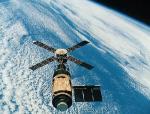 Skylab Over Earth
10.05.1998
Skylab was an orbiting laboratory launched by a Saturn V rocket in May 1973. Skylab was visited three times by NASA astronauts who sometimes stayed as long as two and a half months. Many scientific tests were performed on Skylab, including astronomical observations in ultraviolet and X-ray light.
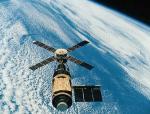 Skylab Over Earth
28.05.2000
Skylab was an orbiting laboratory launched by a Saturn V rocket in May 1973. Skylab was visited three times by NASA astronauts who sometimes stayed as long as two and a half months. Many scientific tests were performed on Skylab, including astronomical observations in ultraviolet and X-ray light.
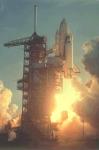 Liftoff of Space Shuttle Columbia
11.04.1999
On April 12, 1981, space flight entered a new era with the first launch of Space Shuttle Columbia. NASA's Space Shuttles land like a normal airplane, carry a heavy cargo, carry a large crew, make use of cheap solid fuel, and are reusable.
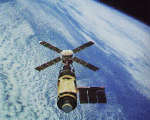 Skylab Over Earth
30.08.1995
Skylab was an orbiting laboratory launched by a Saturn V rocket in May 1973. Skylab was visited three times by NASA astronauts who sometimes stayed as long as two and a half months. Many scientific tests were preformed on Skylab, including astronomical observations in ultraviolet and X-ray light.
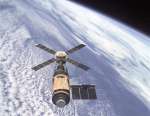 Skylab Over Earth
18.08.2013
Skylab was an orbiting laboratory launched by a Saturn V rocket in May 1973. Skylab, pictured above, was visited three times by NASA astronauts who sometimes stayed as long as two and a half months. Many scientific tests were performed on Skylab, including astronomical observations in ultraviolet and X-ray light.
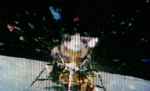 Blasting Off from the Moon
13.12.1998
How did the astronauts get back from the Moon? The Lunar Module that landed two astronauts on the Moon actually came apart. The top part containing the astronauts carried additional rocket fuel which allowed it to blast away, leaving the bottom part on the Moon forever.
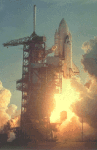 Liftoff of Space Shuttle Columbia
6.08.1995
On April 12, 1981, space flight entered a new era with the first launch of Space Shuttle Columbia, shown above. NASA's Space Shuttles land like a normal plane, carry a heavy cargo, carry a large crew, make use of cheap solid fuel, and are reusable.
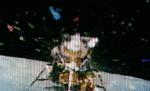 Blasting Off From the Moon
9.06.1996
How did the astronauts get back from the Moon? The Lunar Module that landed two astronauts on the Moon actually came apart. The top part containing the astronauts carried additional rocket fuel which allowed it to blast away, leaving the bottom part on the Moon forever.
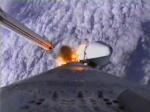 Mars Climate Orbiter Launches
24.12.1998
Looking down from atop a Delta II rocket blasting skyward, solid fuel boosters fall away (left) and the Earth's limb slides into view. These pictures from the launch of the Mars Climate Orbiter were taken as it climbed away from Cape Canaveral Air Station Space Launch Complex 17 on December 11.
|
January February March April May June July August September |
|||||||||||||||||||||||||||||||||||||||||||||||||