
|
You entered: globular cluster
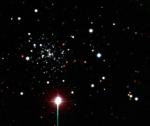 Palomar 13 s Last Stand
25.01.2003
Globular star cluster Palomar 13 has roamed the halo of our Milky Way Galaxy for the last 12 billion years. The apparently sparse cluster of stars just left of center in this composite color digital image, it is one of the smallest, faintest globular clusters known.
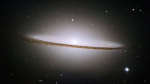 The Sombrero Galaxy from Hubble
15.05.2011
What's going on in the center of this spiral galaxy? Named the Sombrero Galaxy for its hat-like resemblance, M104 features a prominent dust lane and a bright halo of stars and globular clusters.
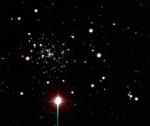 Palomar 13's Last Stand
30.11.2000
Globular star cluster Palomar 13 has roamed the halo of our Milky Way Galaxy for the last 12 billion years. The apparently sparse cluster of stars just left of center in this composite color digital image, it is one of the smallest, faintest globular clusters known.
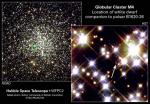 The Planet, the White Dwarf, and the Neutron Star
18.07.2003
A planet, a white dwarf, and a neutron star orbit each other in the giant globular star cluster M4, some 5,600 light-years away. The most visible member of the trio is the white...
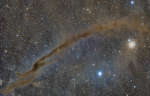 APOD: 2026 July 31 Б NGC 4372 and the Dark Doodad
31.07.2026
The Dark Doodad Nebula drifts through southern skies, a tantalizing target for binoculars toward the small constellation Musca, The Fly. A dusty interstellar cloud, it's seen against rich starfields just south of the Coalsack Nebula and the Southern Cross.
 Blue Stragglers In NGC 6397
22.06.2000
In our neck of the Galaxy stars are too far apart to be in danger of colliding, but in the dense cores of globular star clusters star collisions may be relatively common. In fact...
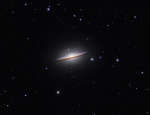 The Sombrero Galaxy from Hale
15.07.2013
What's going on in the center of this spiral galaxy? Named the Sombrero Galaxy for its hat-like resemblance, M104 features a prominent dust lane and a bright halo of stars and globular clusters.
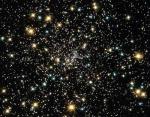 Blue Stragglers in NGC 6397
8.08.2003
In our neck of the Galaxy stars are too far apart to be in danger of colliding, but in the dense cores of globular star clusters star collisions may be relatively common. In fact...
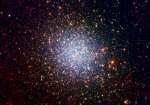 The Giants of Omega Centauri
1.05.2008
Globular star cluster Omega Centauri is some 15,000 light-years away and 150 light-years in diameter. Packed with about 10 million stars, Omega Cen is the largest of 200 or so known globular clusters that roam the halo of our Milky Way galaxy.
 NGC 1569: Starburst in a Small Galaxy
5.02.2004
Grand spiral galaxies often seem to get all the glory, flaunting their young, bright, blue star clusters in beautiful, symmetric spiral arms. But small, irregular galaxies form stars too. In fact, as pictured here...
|
January February March April May June July August |
||||||||||||||||||||||||||||||||||||||||||||||||||||||||