
|
You entered: star cluster
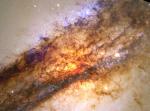 The Center of Centaurus A
21.04.2002
A fantastic jumble of young blue star clusters, gigantic glowing gas clouds, and imposing dark dust lanes surrounds the central region of the active galaxy Centaurus A. This mosaic of Hubble Space Telescope images taken in blue, green, and red light has been processed to present a natural color picture of this cosmic maelstrom.
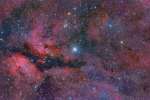 Central Cygnus Skyscape
4.08.2018
Supergiant star Gamma Cygni lies at the center of the Northern Cross, famous asterism in the constellation Cygnus the Swan. Known by its proper name, Sadr, the bright star also lies at the center...
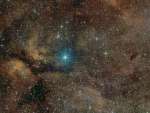 Supergiant Star Gamma Cygni
9.07.2013
Supergiant star Gamma Cygni lies at the center of the Northern Cross, a famous asterism in the constellation of the Swan (Cygnus). Known by the proper name Sadr, the bright star also lies...
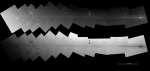 PanSTARRS: The Anti Tail Comet
29.06.2013
Once known as Earth's sunset comet, PanSTARRS (C/2011 L4) is up all night now, but only for northern hemisphere skygazers. Telescopes are required to track its progress as it fades and heads for the outer solar system.
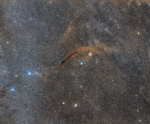 NGC 4372 and the Dark Doodad
30.03.2023
The delightful Dark Doodad Nebula drifts through southern skies, a tantalizing target for binoculars toward the small constellation Musca, The Fly. The dusty cosmic cloud is seen against rich starfields just south of the Coalsack Nebula and the Southern Cross.
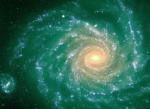 Spiral Galaxy NGC 1232
25.01.2004
Galaxies are fascinating not only for what is visible, but for what is invisible. Grand spiral galaxy NGC 1232, captured in detail by one of the new Very Large Telescopes, is a good example.
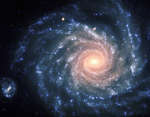 Grand Spiral Galaxy NGC 1232
7.01.2012
Galaxies are fascinating not only for what is visible, but for what is invisible. Grand spiral galaxy NGC 1232, captured in detail by one of the new Very Large Telescopes, is a good example.
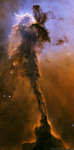 The Fairy of Eagle Nebula
2.12.2018
The dust sculptures of the Eagle Nebula are evaporating. As powerful starlight whittles away these cool cosmic mountains, the statuesque pillars that remain might be imagined as mythical beasts. Featured here is one of several striking dust pillars of the Eagle Nebula that might be described as a gigantic alien fairy.
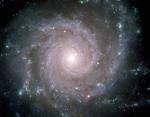 M74: The Perfect Spiral
4.10.2001
If not perfect, then this spiral galaxy is at least one of the most photogenic. An island universe of about 100 billion stars, 30 million light-years away toward the constellation Pisces, NGC 628 or M74 presents a gorgeous face-on view to earthbound astronomers.
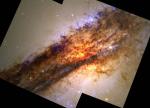 The Center of Centaurus A
1.10.2000
A fantastic jumble of young blue star clusters, gigantic glowing gas clouds, and imposing dark dust lanes surrounds the central region of the active galaxy Centaurus A. This mosaic of Hubble Space Telescope images taken in blue, green, and red light has been processed to present a natural color picture of this cosmic maelstrom.
|
January February March April May |
|||||||||||||||||||||||||||||||||||||||||||||||||