
|
You entered: Sun halo
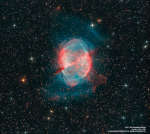 M27: Not a Comet
20.08.2015
While hunting for comets in the skies above 18th century France, astronomer Charles Messier diligently kept a list of the things he encountered that were definitely not comets. This is number 27 on his now famous not-a-comet list.
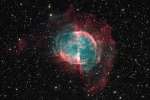 M27: Not a Comet
26.08.2010
While hunting for comets in the skies above 18th century France, astronomer Charles Messier diligently kept a list of the things he encountered that were definitely not comets. This is number 27 on his now famous not-a-comet list.
 APOD: 2024 January 3 Б A SAR Arc from New Zealand
3.01.2024
What is that unusual red halo surrounding this aurora? It is a Stable Auroral Red (SAR) arc. SAR arcs are rare and have only been acknowledged and studied since 1954. The featured wide-angle photograph...
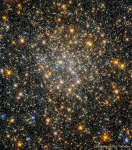 Palomar 6: Globular Star Cluster
19.10.2021
Where did this big ball of stars come from? Palomar 6 is one of about 200 globular clusters of stars that survive in our Milky Way Galaxy. These spherical star-balls are older than our Sun as well as older than most stars that orbit in our galaxy's disk.
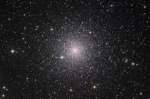 Globular Star Cluster NGC 6752
5.07.2013
Some 13,000 light-years away toward the southern constellation Pavo, the globular star cluster NGC 6752 roams the halo of our Milky Way galaxy. Over 10 billion years old, NGC 6752 follows clusters Omega Centauri and 47 Tucanae as the third brightest globular in planet Earth's night sky.
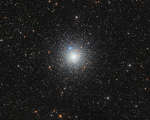 Globular Star Cluster NGC 6752
23.01.2020
Some 13,000 light-years away toward the southern constellation Pavo, the globular star cluster NGC 6752 roams the halo of our Milky Way galaxy. Over 10 billion years old, NGC 6752 follows clusters Omega Centauri and 47 Tucanae as the third brightest globular in planet Earth's night sky.
 Globular Star Cluster NGC 6752
25.10.2024
Some 13,000 light-years away toward the southern constellation Pavo, the globular star cluster NGC 6752 roams the halo of our Milky Way galaxy. Over 10 billion years old, NGC 6752 follows clusters Omega Centauri, 47 Tucanae, and Messier 22 as the fourth brightest globular in planet Earth's night sky.
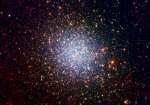 The Giants of Omega Centauri
1.05.2008
Globular star cluster Omega Centauri is some 15,000 light-years away and 150 light-years in diameter. Packed with about 10 million stars, Omega Cen is the largest of 200 or so known globular clusters that roam the halo of our Milky Way galaxy.
|
January February March April May June July August |
||||||||||||||||||||||||||||||||||||||||||||||||||||||||