
|
You entered: Solar System
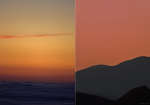 Two Views, Two Crescents
11.11.2010
Venus rose in a glowing dawn sky on November 5th, just before the Sun. For early morning risers, its brilliant crescent phase was best appreciated with binoculars or a small telescope. On that...
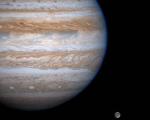 Jupiter Eyes Ganymede
12.12.2000
Who keeps an eye on the largest moon in the Solar System? This moon, visible on the lower right, is Ganymede, and the planet it orbits, Jupiter, seems to be keeping a watchful eye, as its Great Red Spot appears serendipitously nearby.
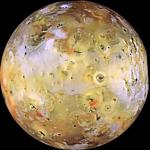 Io s Surface: Under Construction
19.10.2002
Like the downtown area of your favorite city, the roads you drive to work on, and any self-respecting web site ... Io's surface is constantly under construction. This moon of Jupiter holds the distinction of being the Solar System's most volcanically active body -- its bizarre looking surface continuously formed and reformed by lava flows.
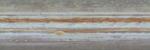 Jupiter Unpeeled
6.09.2003
Slice Jupiter from pole to pole, peel back its outer layers of clouds, stretch them onto a flat surface ... and for all your trouble you'd end up with something that looks a lot like this. Scrolling right will reveal the full picture, a color mosaic of Jupiter from the Cassini spacecraft.
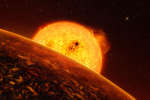 CoRoT Satellite Discovers Rocky Planet
23.09.2009
How similar is exoplanet CoRoT-7b to Earth? The newly discovered extra-solar planet is the closest physical match yet, with a mass about five Earths and a radius of about 1.7 Earths. Also, the home star to CoRoT-7b, although 500 light years distant, is very similar to our Sun.
 Gas and Snow Jets from Comet Hartley 2
23.11.2010
Unusual jets have been discovered emanating from Comet Hartley 2. The EPOXI spacecraft imaged the jets in unprecedented detail during its flyby of the comet earlier this month. Pictured above, sun-illuminated jets shoot away from the two-kilometer long decaying iceberg that orbits the Sun between Earth and Jupiter.
 Hale-Bopp on Schedule
25.07.1996
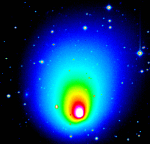
Late March and early April of 1996 marked a banner season for viewing the spectacular naked-eye comet Hyakutake. The spring of 1997 could well offer a similar cometary wonder, Comet Hale-Bopp. Discovered last year while approaching the inner solar sytem Hale-Bopp has been eagerly watched for signs that it will indeed brighten spectacularly.
 Comet over California
7.03.2008
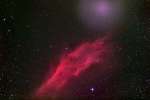
Still gracing northern skies, a fading Comet Holmes lies at the top edge of this colorful skyview, recorded on March 4. The reddish emission nebula below it is NGC 1499, also known as the California Nebula for its resemblance to the outline of the state on the US west coast.
 The Voyagers' Message in a Bottle
29.06.1996
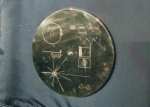
Launched in the summer of 1977, NASA's Voyager 1 and 2 spacecraft are now over 4.5 billion miles from the Sun. Still operational, the Voyagers are being tracked and commanded through the Deep Space Network.
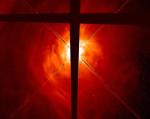 AB Aurigae: How To Make Planets
11.06.1999
This enhanced Hubble Space Telescope image shows in remarkable detail the inner portion of the disk of dust and gas surrounding the star AB Aurigae. Knots of material, visible here for the first time...
|
January February March April May June July August September |
|||||||||||||||||||||||||||||||||||||||||||||||||