
|
You entered: planets
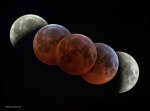 The Umbra of Earth
26.01.2019
The dark, inner shadow of planet Earth is called the umbra. Shaped like a cone extending into space, it has a circular cross section most easily seen during a lunar eclipse. For example...
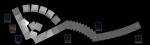 Solar System Portrait
14.02.2004
On another Valentine's Day (February 14, 1990), cruising four billion miles from the Sun, the Voyager 1 spacecraft looked back to make this first ever family portrait of our Solar System. The complete portrait is a 60 frame mosaic made from a vantage point 32 degrees above the ecliptic plane.
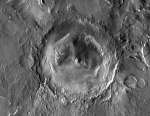 Gale Crater
29.07.2011
This sharp view from the Thermal Emission Imaging System camera on NASA's Mars Odyssey orbiter is centered on 154 kilometer (96 mile) wide Gale crater, near the martian equator. Within Gale, an impressive layered mountain rises about 5 kilometers (3 miles) above the crater floor.
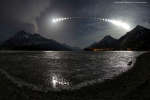 Waterton Lake Eclipse
17.04.2014
Recorded on April 15th, this total lunar eclipse sequence looks south down icy Waterton Lake from the Waterton Lakes National Park in Alberta, Canada, planet Earth. The most distant horizon includes peaks in Glacier National Park, USA.
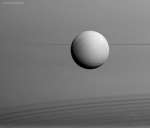 Dione, Rings, Shadows, Saturn
24.08.2015
What's happening in this strange juxtaposition of moon and planet? First and foremost, Saturn's moon Dione was captured here in a dramatic panorama by the robotic Cassini spacecraft currently orbiting the giant planet. The bright and cratered moon itself spans about 1100-km, with the large multi-ringed crater Evander visible on the lower right.
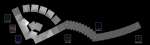 Solar System Portrait
11.02.2017
On Valentine's Day in 1990, cruising four billion miles from the Sun, the Voyager 1 spacecraft looked back one last time to make this first ever Solar System family portrait. The complete portrait is a 60 frame mosaic made from a vantage point 32 degrees above the ecliptic plane.
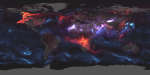 Aerosol Earth
1.09.2018
On August 23, 2018 the identification and distribution of aerosols in the Earth's atmosphere is shown in this dramatic, planet-wide visualization. Produced in real time, the Goddard Earth Observing System Forward Processing (GEOS...
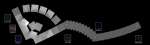 Solar System Family Portrait
14.02.2019
On Valentine's Day in 1990, cruising four billion miles from the Sun, the Voyager 1 spacecraft looked back one last time to make this first ever Solar System family portrait. The complete portrait is a 60 frame mosaic made from a vantage point 32 degrees above the ecliptic plane.
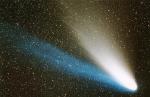 Springtime Comet Fever
20.03.1997
Today marks the Vernal Equinox, the first day of Spring for planet Earth's northern hemisphere. Despite recent attempts by other spectacular and dramatic celestial events to take center stage, Comet Hale-Bopp remains the most popular object in the sky (according to APOD access logs!) and is likely to make this spring memorable for many.
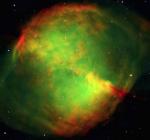 M27: Not A Comet
9.10.1998
While searching the skies above 18th century France for comets, astronomer Charles Messier diligently recorded this object as number 27 on his list of things which are definitely not comets. So what is it?
|
January February |
|||||||||||||||||||||||||||||||||||||||||||||||||